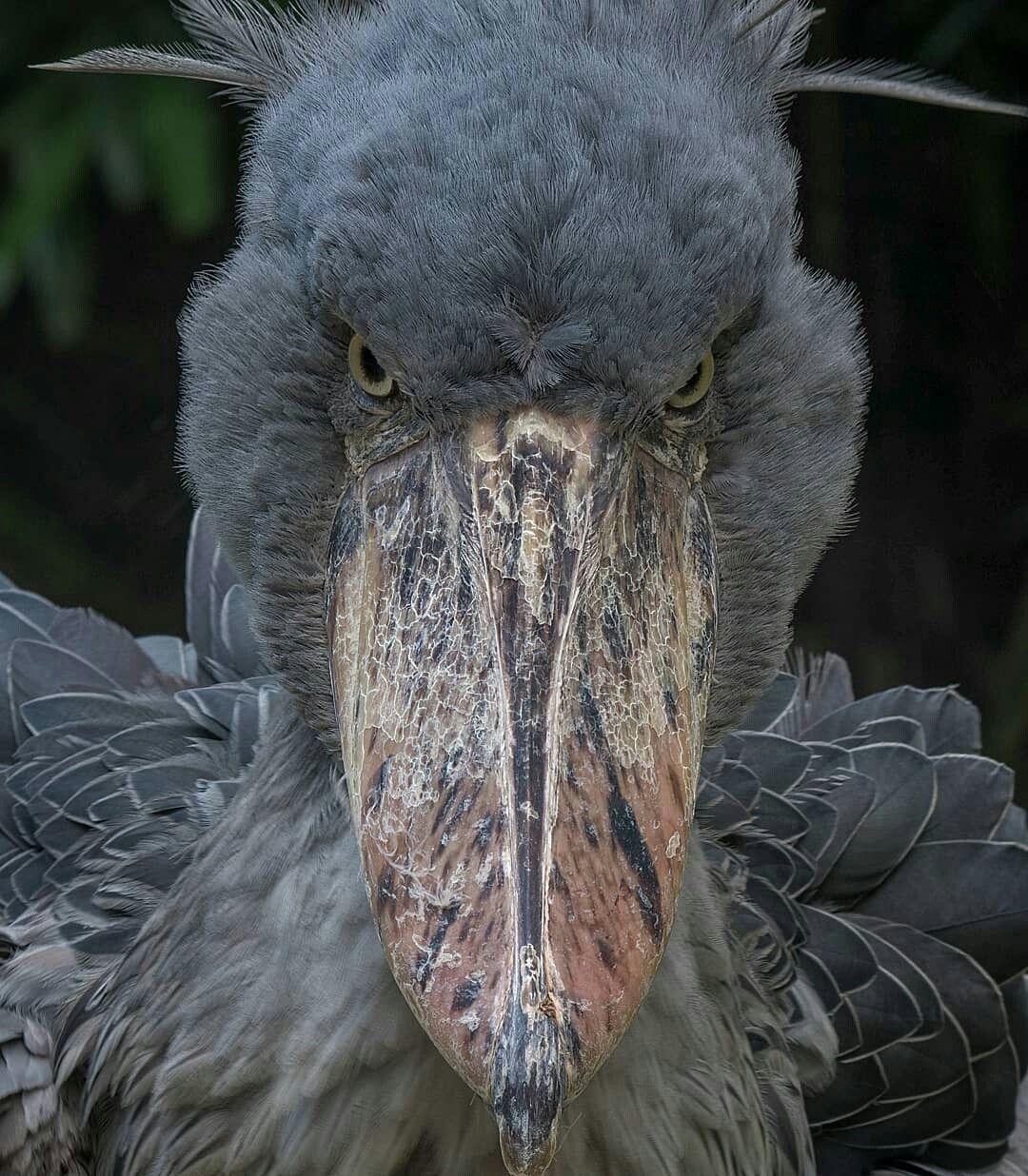
The shoebill, also called the whale-headed stork, is one of the world’s most distinctive birds. Despite its common nickname, it is more closely related to pelicans and herons than to true storks.
Some fascinating facts:
- Size: About 1.1–1.5 m (3.6–5 ft) tall with a wingspan up to 2.6 m (8.5 ft).
- Bill: Its enormous, shoe-shaped bill can reach around 24 cm (9 in) long and ends in a sharp hook, making it ideal for catching prey.
- Diet: Eats lungfish, catfish, frogs, snakes, monitor lizards, and even young crocodiles.
- Habitat: Lives in freshwater swamps across tropical East Africa, especially in South Sudan, Uganda, Tanzania, Zambia, and the Democratic Republic of the Congo.
- Behavior: Famous for standing completely motionless for long periods before striking prey with remarkable speed. Its intense, unblinking stare has made it popular online.
- Conservation: The species is classified as Vulnerable, with habitat loss, hunting, and disturbance contributing to population declines.
One of the shoebill’s most unusual behaviors is bill-clattering. It rapidly snaps its huge bill together to communicate, especially during courtship and at the nest.
Its prehistoric appearance and calm, statuesque posture have earned it a reputation as a “living dinosaur,” although it is simply a modern bird with some striking ancient-looking features.