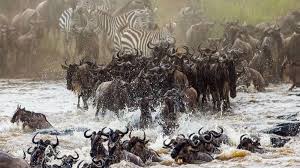
The Great Migration is the annual movement of millions of wildebeest, zebras, and other grazing animals across the Serengeti-Mara ecosystem, which spans:
- Serengeti National Park (Tanzania)
- Maasai Mara National Reserve (Kenya)
Migration Cycle (Year-Round Journey)
Here’s how the cycle generally works, though it’s driven by seasonal rains and grass availability, so the timing may vary slightly each year:
January – March (Calving Season) – Southern Serengeti (Tanzania)
- Herds gather in Ndutu and southern Serengeti
- Over 500,000 calves are born in a 2–3 week period (usually February)
- High predator activity: lions, hyenas, cheetahs
April – May (Long Rains) – Central to Western Serengeti
- Herds begin moving northwest, following fresh grass
- Scattered movements and dramatic landscapes
June – July (Grumeti River Crossings) – Western Serengeti
- Risky Grumeti River crossings filled with crocodiles
- The herds start to mass before entering Kenya
August – October (Mara River Crossings) – Northern Serengeti to Maasai Mara (Kenya)
- Peak drama: famous Mara River crossings
- Wildebeest leap into crocodile-infested waters
- Huge tourism draw, especially in Maasai Mara
November – December – Return South to Serengeti
- Short rains begin
- Herds migrate back toward southern Serengeti to begin the cycle again
Key Species Involved:
- Wildebeest (~1.5 million)
- Zebras (~200,000)
- Thomson’s gazelles, eland, and impalas
- Predators: lions, leopards, hyenas, crocodiles, cheetahs
Ecological Importance:
- Supports a huge predator-prey balance
- Drives tourism in Kenya and Tanzania
- Regenerates grasslands and spreads seeds, helping maintain the ecosystem Indeed this is a beautiful experience in a lifetime!